Carpet, kilim, cicim, sumak: what’s the difference?
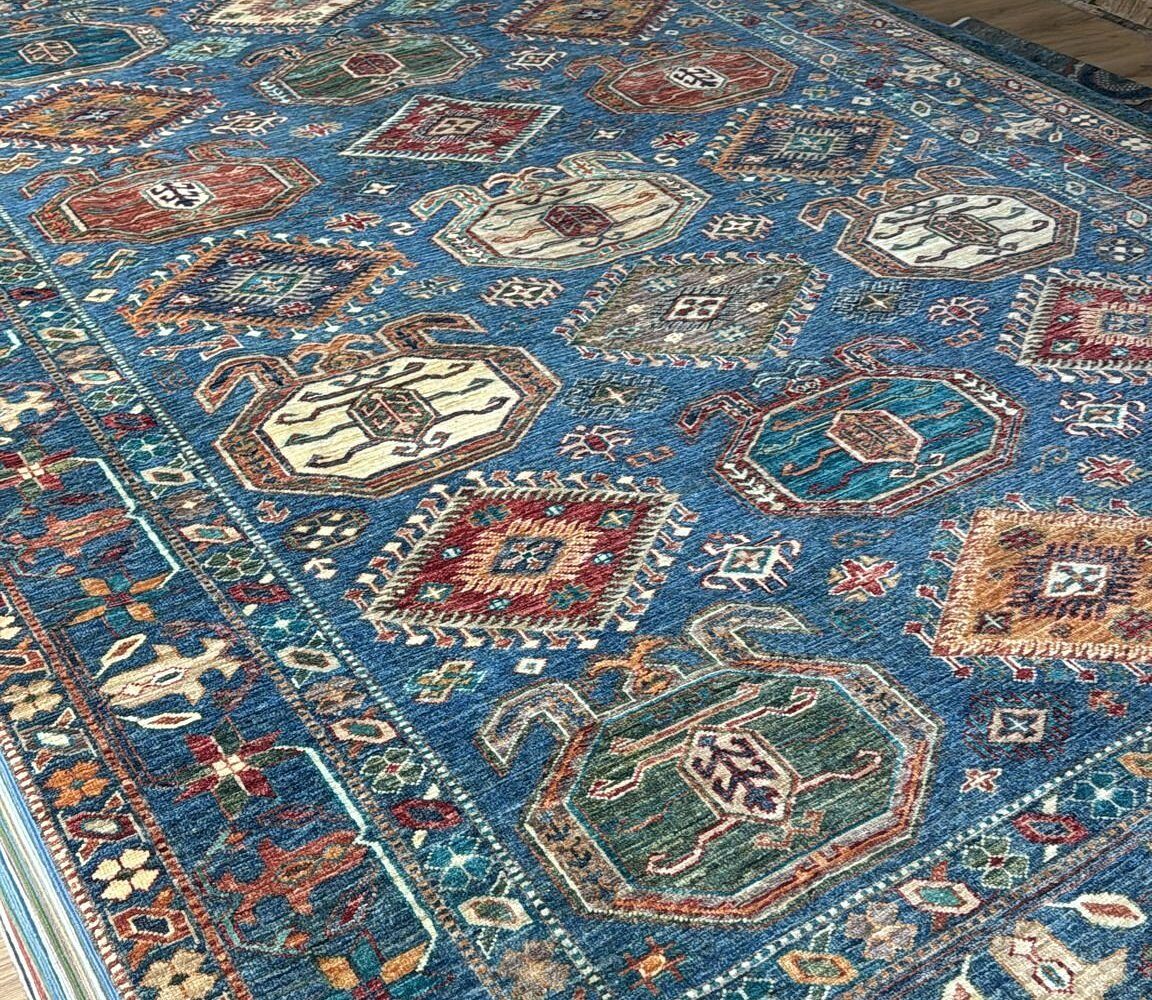
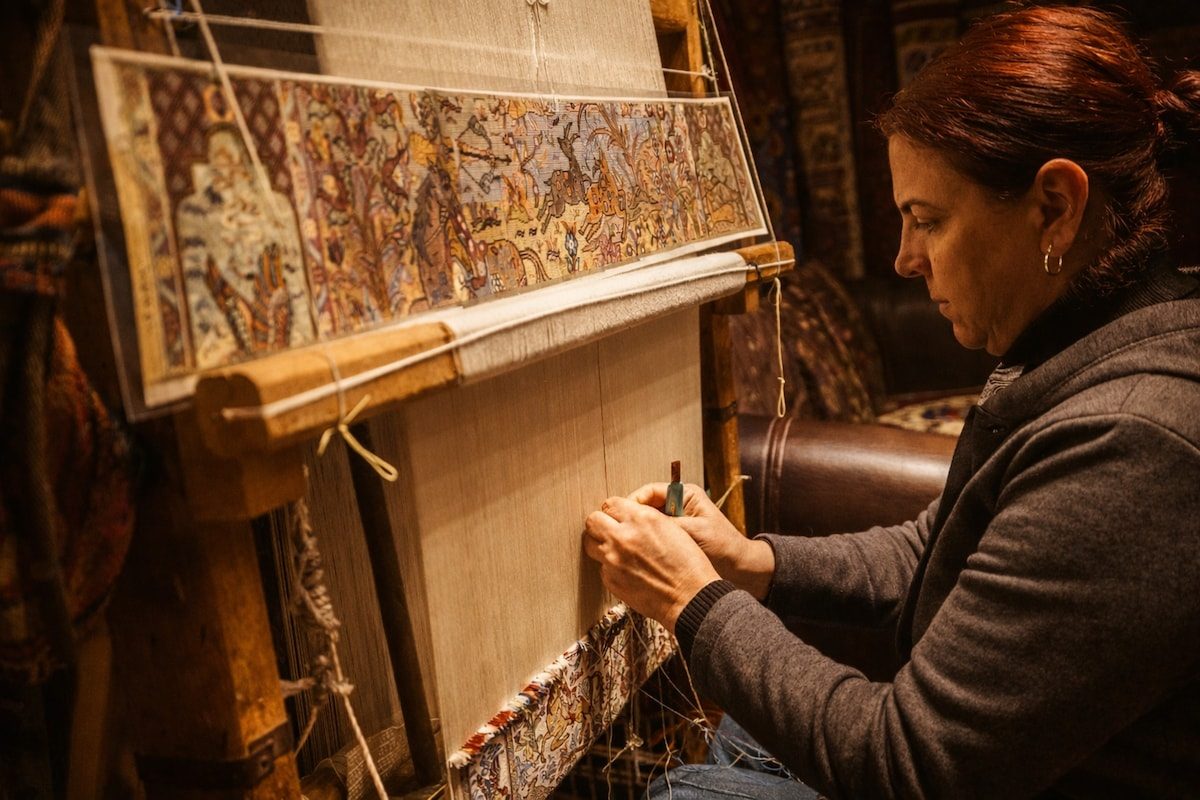
Hand-knotted carpet
Each knot is tied by hand onto the warp threads and trimmed to form a soft pile. Turkish carpets use the symmetrical double knot.
Kilim
Flat-woven with no pile. Weft threads pass through the warps to form the design; light, reversible and usually geometric.
Cicim
A flat-woven ground decorated with extra-weft brocading, so motifs seem to sit on the surface.
Sumak
A dense flatweave where the weft wraps around the warps; the back shows loose yarn ends.
Silk carpet
Silk on silk, with very high knot density and a sheen that shifts with the light. Hereke is the most famous.
Village & nomadic rugs
Wool on wool, natural dyes and bold geometric motifs. Each one carries its weaver’s story.
The Turkish double knot.
The Turkish (Gördes) knot is symmetrical: the yarn passes over two warp threads, wraps behind each one, and both ends emerge between them. It gives the carpet strength and crisp, well-defined motifs.
The Persian (Senneh) knot is asymmetrical: it wraps around a single warp, suiting more fluid, curvilinear designs.
Knot density (knots per cm²) shows how fine the detail can be, but it is not the only measure of value. Materials, dyes, design and workmanship matter just as much.
7 checks to recognise a hand-made carpet.
Turn it over
On a hand-knotted carpet the design is clearly visible on the back, with small irregularities. Machine-made backs look too perfect or are covered with a stiff backing.
Look at the fringe
On a genuine carpet the fringe is the continuation of the warp threads. A fringe that has been sewn on is usually a sign of machine production.
Count the knots
On the back, count the knots along 1 cm horizontally and vertically and multiply. Higher density means finer detail.
Look for abrash
Hand-spun wool and natural dyes create gentle shifts of colour across the field (abrash). It is character, not a flaw.
Love small asymmetries
Motifs or borders that differ slightly are the signature of a human hand.
Feel the pile
Good wool contains lanolin: it is soft, springy and has a gentle sheen. It should bounce back when you press it.
Ask for its story
You should get clear answers about its region, age, materials and dyes. A good dealer is happy to explain.
Tip
You practise every one of these checks on real carpets during the caravanserai experience.
Anatolia’s weaving map.
Every region has its own “accent”, in colour, motif and technique.
Silk on silk with extremely fine work, from a workshop founded in 1843 for the Ottoman palaces.
The medallion and star carpets of the 15th–17th centuries, which travelled to European courts and paintings.
Prayer rugs in soft tones: pale yellows, dusty rose and gold.
Bold geometric designs and deep reds, from one of Anatolia’s oldest weaving traditions.
Seljuk heritage: some of the oldest known Turkish carpets were found in Konya’s Alaeddin Mosque.
Wool, silk and floral designs; nearby Bünyan and Yahyalı are famous weaving centres too.
Antalya’s dense, hard-wearing wool rugs with small geometric motifs in deep red and navy.
Bold, Caucasian-influenced designs and a thick, durable pile.
Traditional carpet sizes
Approximate sizes. Because every carpet is hand-made, a few centimetres of variation is normal.
Bargaining, tea and paperwork.
Tea is hospitality
The tea you’re offered is a welcome, not an obligation. Accepting it commits you to nothing.
Take your time
Have carpets laid on the floor and look from both ends and in different light, since colours change with the direction of the pile.
Know your budget
Sharing your budget early helps focus on pieces that suit you. Bargaining is a conversation, not a fight.
Get the paperwork
Ask for an invoice and a document stating the carpet’s region, materials and age.
Shipping & customs
Ask about shipping, insurance and your country’s customs rules in advance. Antique carpets may require an export certificate.
“No” is fine
On a good experience, leaving without buying anything is completely normal. It is with us.
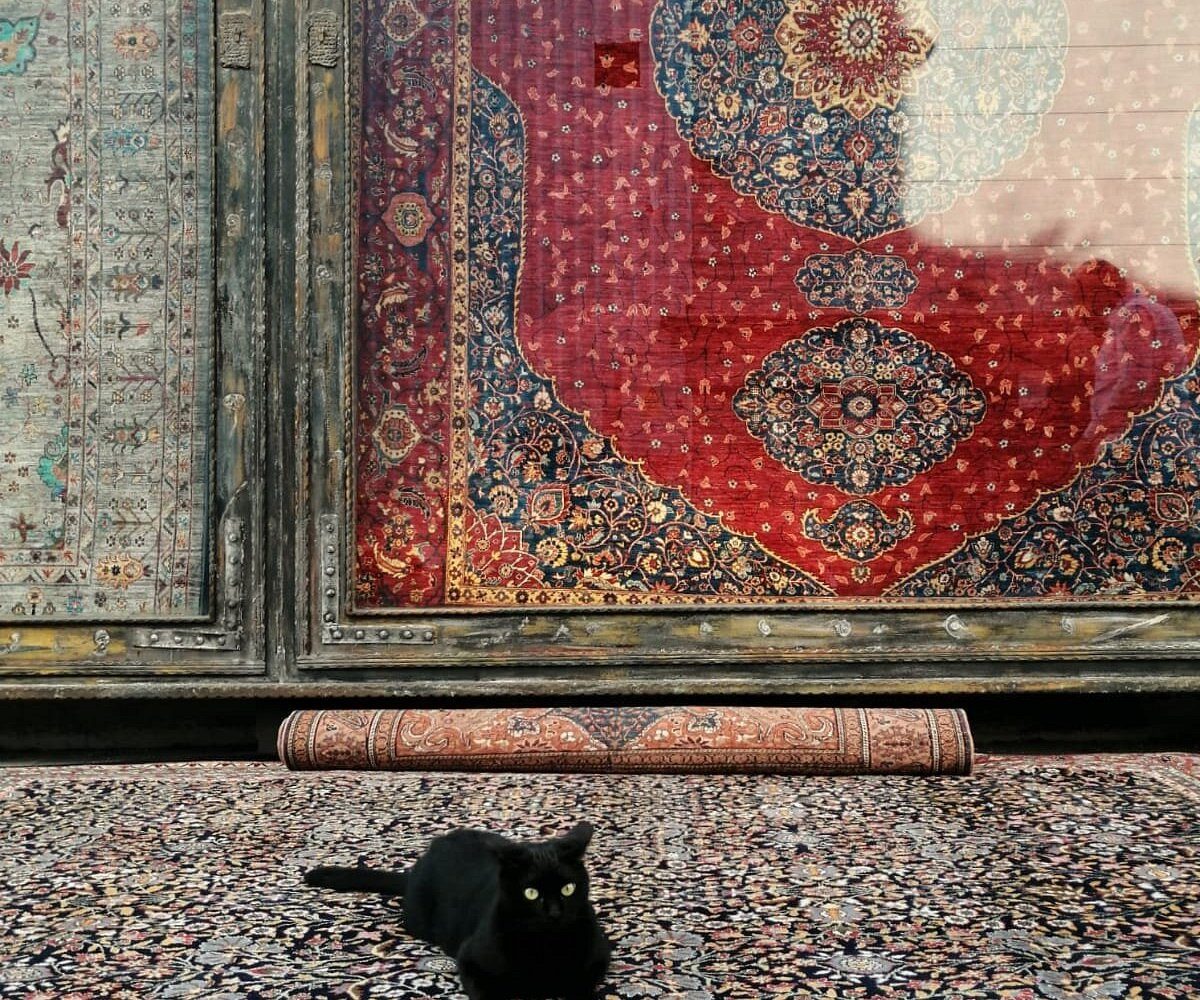
A carpet for generations.
- Rotate the carpet every 6–12 months so it wears evenly.
- Vacuum without a beater bar, in the direction of the pile.
- Keep it out of direct sunlight; even natural dyes can fade over time.
- Blot spills immediately with a clean cloth, never rub.
- Have it professionally hand-washed every few years.
- Never fold it for storage: roll it, wrap it in breathable fabric, and air it now and then against moths.